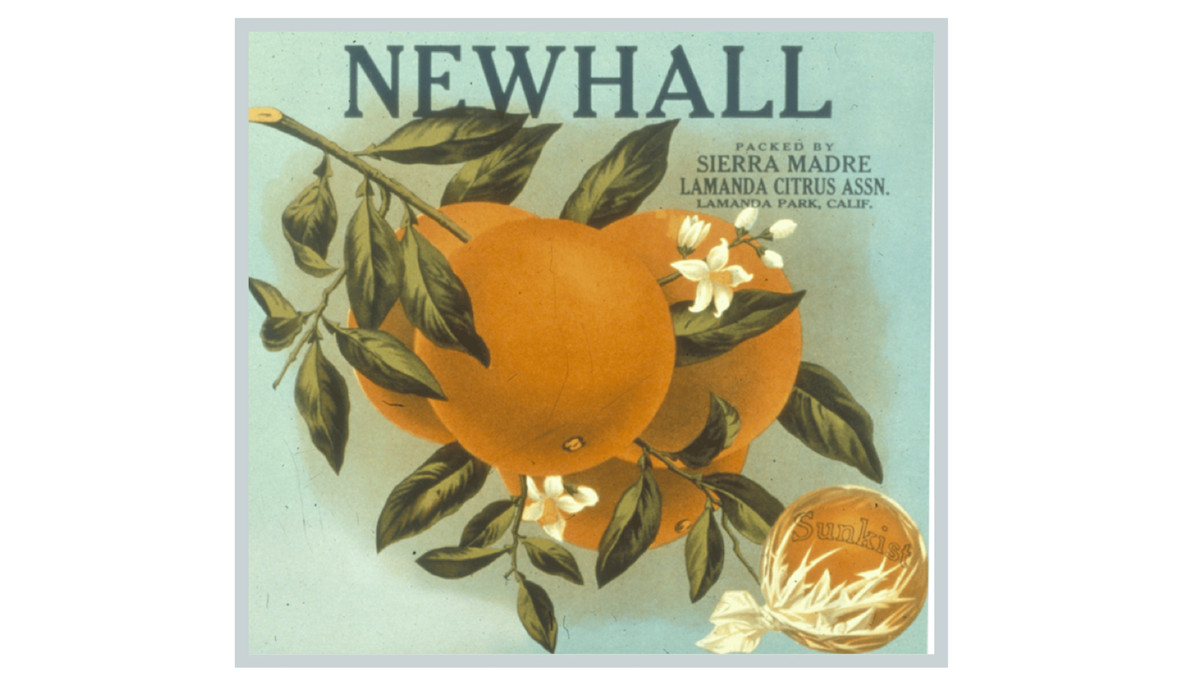
Our iconic and storied past helps inspire the next chapter of Valencia. Read more about how citrus helped shape California’s legacy and continues to influence the spirit of this community today.
Sunkist and Citrus Helped Shape California’s Legacy
According to The Signal: “When Sunkist Growers moved its headquarters from Sherman Oaks to Santa Clarita in 2014, it signaled a vibrant new chapter for both the iconic citrus cooperative and the local community. Valencia has now become the latest link in Southern California’s long, juicy legacy of citrus growing, packing and marketing — a legacy told through historic packing houses, utopian groves, and the enduring art of the fruit crate label.
After more than a century lifting up California’s family citrus growers, Sunkist Growers headquarters pulses with the activity of sales, marketing and executive teams, supporting more than 1,500 grower members in the oldest continually operating agricultural cooperative in the United States. “Everything we do is for our growers,” says the company’s mission, a testament to over 130 years advancing California citrus through collaboration and innovation.
The Valencia headquarters symbolizes Sunkist’s commitment to both tradition and forward-thinking growth, ensuring Santa Clarita’s spot on the map as a key player in the global citrus industry. For many local residents, citrus is more than a business — it’s the scent of blossoms in spring, the hum of bees and a bright slice of history.
The stretch of California Highway 126, known as Heritage Valley, is a key Southern California citrus region and is often called the Citrus Capital of the World.
The Legacy of Packing Houses
Santa Clarita’s citrus story is part of a broader Southern California tapestry woven through railways and packing lines. The region boasts a remarkable collection of historic citrus packing houses — once gleaming hubs of seasonal labor, now icons of architectural and agricultural history.
From Fullerton to Anaheim and Orange, these structures have evolved from working facilities into cultural landmarks, preserving the legacy of an industry that shaped communities across the region.
The Art and Business of Crate Labels
From the late 19th century into the 20th, citrus crate labels were as important to California’s fortunes as the fruit itself. For family farms, a vivid label was both a badge of pride and a marketing tool — the face California showed to the world as its oranges traveled cross-country by train.
These labels often featured orchard landscapes, regional imagery or personal family touches, evolving over time alongside the growth of cooperatives like Sunkist. Today, they serve as collectible pieces of history, capturing a moment in time when artistry and agriculture worked hand in hand.
Why So Many Labels Survive
Despite the passage of generations, hundreds of thousands of original fruit crate labels still exist today. Many were preserved in warehouses or saved by workers and collectors, eventually becoming prized artifacts that tell the story of California’s agricultural roots.
The Santa Clarita Angle: Past, Present, and Future
Today, Sunkist’s presence in Santa Clarita ties the city directly to California’s citrus legacy. The headquarters represents more than just operations — it’s a living connection between the region’s agricultural past and its innovative future.
Nearby growers and communities continue to carry that tradition forward, blending history with modern practices while keeping the spirit of citrus alive. For those who explore it, every label, every grove and every story reflects a deeper connection to the land and its legacy.”
By continuing the same legacy of stewardship on which our community was founded over a century ago, we’re conserving the precious resources it needs for the future. And since the need to connect to nature is undeniably human naturally, that matters.
Even the name Valencia reflects this citrus legacy, drawing from the Valencia orange originally named after Valencia, Spain, a region long known for its citrus, and rooted in Southern California’s agricultural history.
Source: SignalSCV.com


